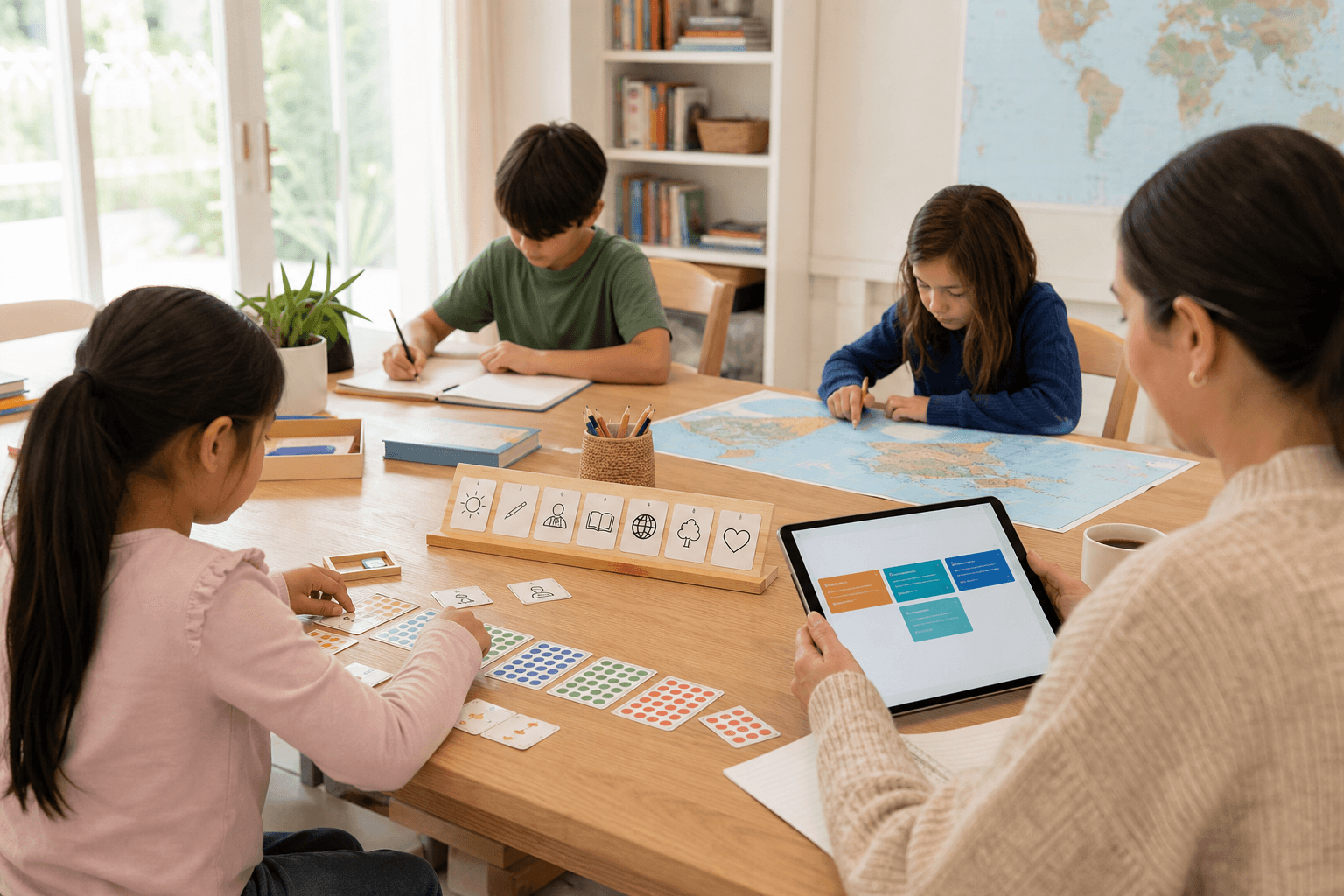
Primary science at home does not need to start with dramatic experiments. For many families, the safer and more useful starting point is careful observation: water, leaves, stones, shadows, magnets, simple materials, and the question of what changed.
A strong science rhythm has four parts. The child notices something, compares it with another example, records a small piece of evidence, and explains the pattern in ordinary language. That is real inquiry, even when the materials are sealed jars, paper, light, water, or household objects.
This matters for homeschooling and worldschooling because science can travel. A beach shell, a kitchen jar, a city shadow, or a plant on a windowsill can become evidence when the system connects it to a skill, a question, and a next step.
SchoolQuest AI should make this easier, not louder. The app can suggest safe observation tasks, connect them to the Grade 1-6 program map, ask for one clear explanation, and save a parent-friendly portfolio note without turning science into a risky performance.
The boundary is important: families still need adult supervision, local safety judgment, and age-appropriate materials. SchoolQuest AI can structure inquiry, but it should never push children toward unsafe chemicals, fire, pressure, sharp tools, or experiments parents cannot comfortably supervise.
Next decision
Turn a guide into a concrete family step
Choose the next route based on what you are deciding now: a first calm week, complete Grade 1-6 coverage, family fit before an invitation, or phone/tablet use for gifted/high-IQ, ADHD, autistic, 2e, and mixed-pace learners.
Start with one calm week
Use the starter guide when your family needs a practical rhythm for attention, confidence, sensory load, and different learning paces before changing everything.
Open starter guideCheck full primary coverage
Open the program map when you need to see how math, reading, writing, science, geography, projects, life skills, and portfolio evidence fit together.
Open program mapUse both apps as one family path
Use SchoolQuest AI for weekly rhythm, mastery checks, records, and parent review. Add Little AI Minds when core learning is done and a bigger creative AI project makes sense.
See the family bundle pathDecide whether SchoolQuest fits now
Review the fit signals families should understand before joining: High-IQ, ADHD, autism, 2e, mixed learning styles, boundaries, help rhythm, and what should be clear before any paid access.
Review family fitTry the app surface on devices
Use the install page when you want the learning area and parent view on a phone or tablet while articles, pricing, and legal information stay in the browser.
Open install guideAI Homeschooling Starter Guide
Get the starter guide
Join the guide list and we will use this interest signal to send the right next steps.