When a child has ADHD or executive-function friction, the problem is often not willingness to learn. The problem is that the learning block is too long, the goal is too blurry, or the next step arrives after attention has already collapsed.
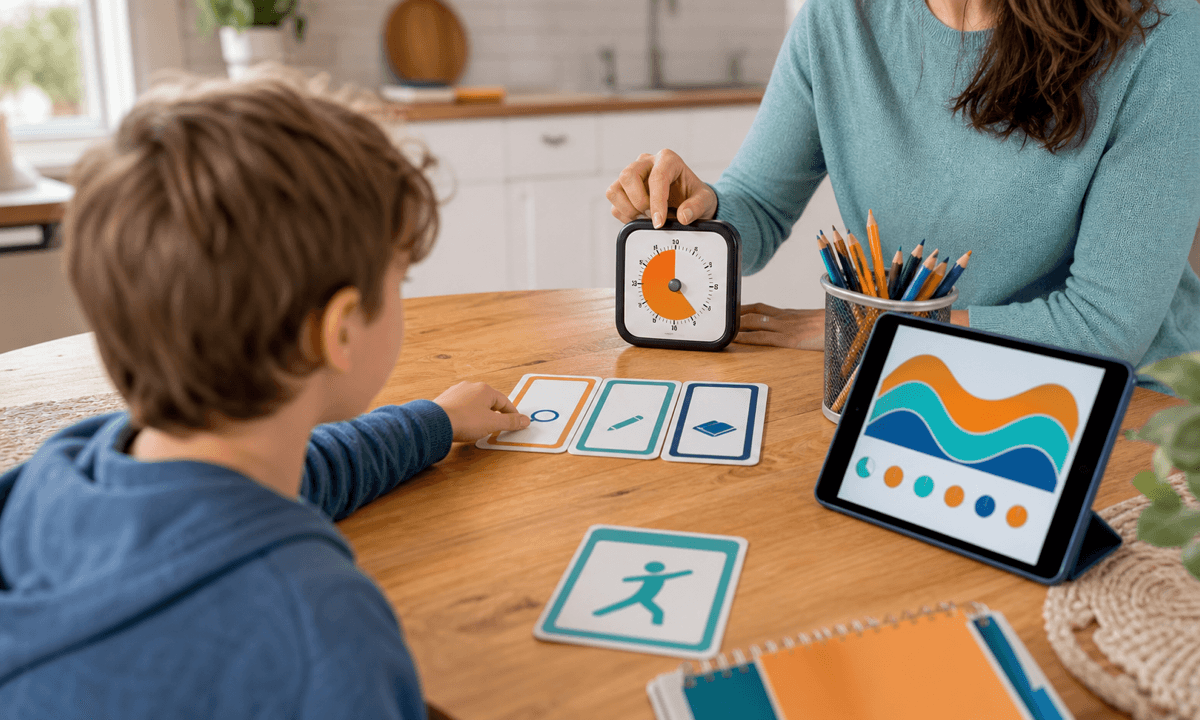
A short learning loop changes the shape of the day. The parent sets one visible target, the child works for a focused window, the system checks the response quickly, and the next activity becomes either practice, review, a smaller step, or a movement break.
The same design can help autistic children who need predictability, gifted children who need enough challenge, and learners whose pace changes by subject. The goal is not one perfect style; it is a loop that can adjust the amount of structure, challenge, sensory load, and recovery time.
This is where SchoolQuest AI fits inside the Little AI Minds Universe: it turns a parent plan into a calm sequence of missions, mastery checks, review moments, and portfolio evidence without asking the family to manage a full classroom schedule.
The loop also protects parent workload. Instead of preparing a stack of worksheets and then negotiating through all of them, the parent can watch one signal at a time: energy, accuracy, confidence, and whether the next challenge should become easier, harder, or shorter.
For families leaving a school setting that did not fit, the first win is not a perfect timetable. The first win is a repeatable 20 to 30 minute rhythm that ends with proof of learning and a child who can see what comes next.
Next decision
Turn a guide into a concrete family step
Choose the next route based on what you are deciding now: a first calm week, complete Grade 1-6 coverage, family fit before an invitation, or phone/tablet use for gifted/high-IQ, ADHD, autistic, 2e, and mixed-pace learners.
Start with one calm week
Use the starter guide when your family needs a practical rhythm for attention, confidence, sensory load, and different learning paces before changing everything.
Open starter guideCheck full primary coverage
Open the program map when you need to see how math, reading, writing, science, geography, projects, life skills, and portfolio evidence fit together.
Open program mapUse both apps as one family path
Use SchoolQuest AI for weekly rhythm, mastery checks, records, and parent review. Add Little AI Minds when core learning is done and a bigger creative AI project makes sense.
See the family bundle pathDecide whether SchoolQuest fits now
Review the fit signals families should understand before joining: High-IQ, ADHD, autism, 2e, mixed learning styles, boundaries, help rhythm, and what should be clear before any paid access.
Review family fitTry the app surface on devices
Use the install page when you want the learning area and parent view on a phone or tablet while articles, pricing, and legal information stay in the browser.
Open install guideAI Homeschooling Starter Guide
Get the starter guide
Join the guide list and we will use this interest signal to send the right next steps.